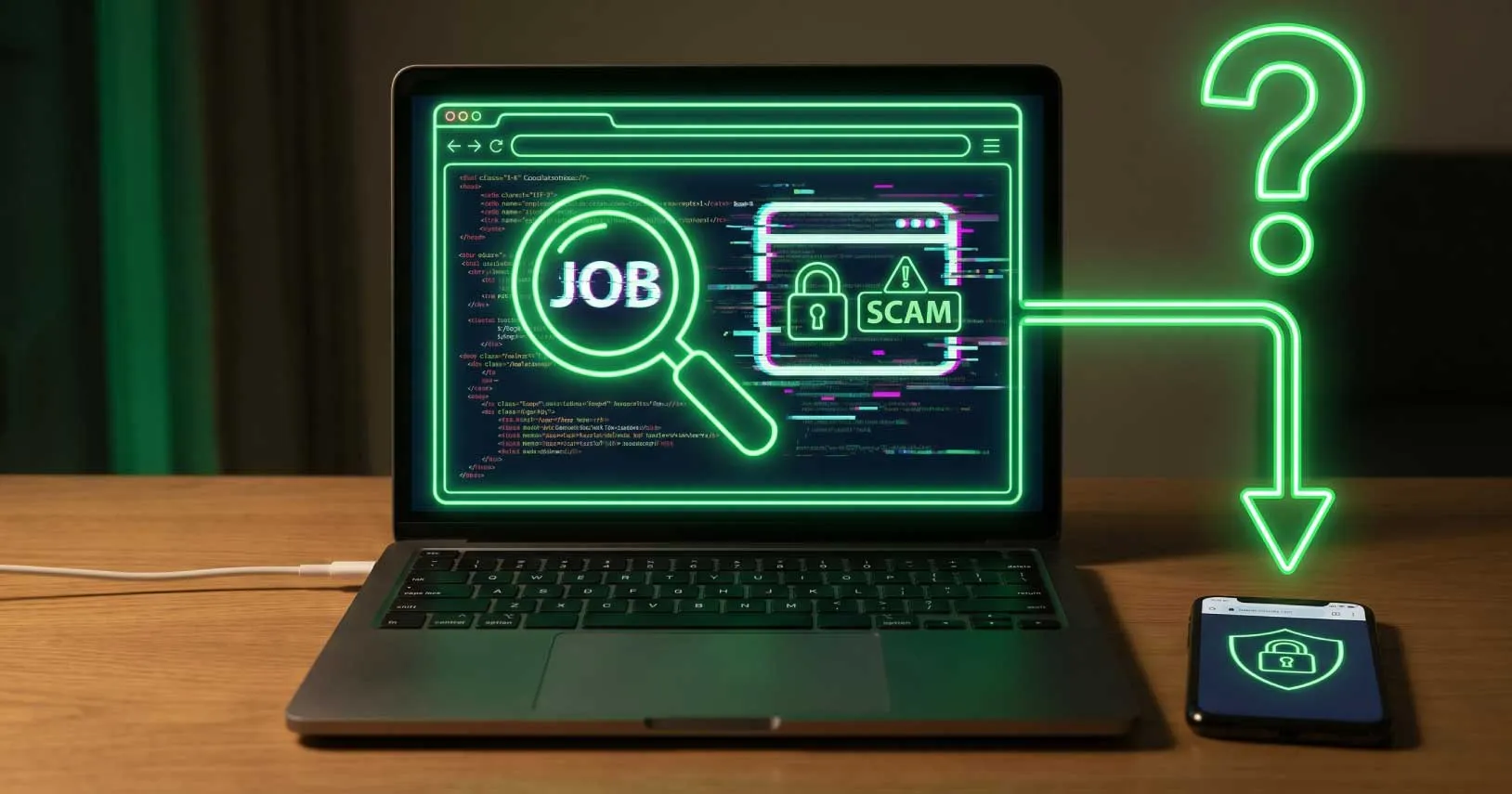
How to Spot Fake Entry Level Work From Home Jobs Online

Finding a legitimate remote job shouldn't feel like navigating a minefield. Yet, if you are searching for entry-level work-from-home positions, you have probably already encountered a dozen scams disguised as life-changing opportunities.
Scammers understand the current job market perfectly. They know that remote work is highly coveted, and they know that entry-level applicants are often eager, stressed, and willing to jump through hoops to secure a paycheck. As a result, the internet is flooded with sophisticated employment traps that look incredibly convincing.
You cannot rely on job boards—even major ones like Indeed or LinkedIn—to catch every fraudulent listing before you apply. To protect your identity and your bank account, you must learn how to spot fake entry level work from home jobs online before you ever hit the "Submit Application" button.
The Evolution of Remote Employment Fraud
Ten years ago, spotting an employment scam was easy. They usually arrived in your spam folder, written in broken English, promising thousands of dollars for a few hours of work.
Those days are over.
Modern employment fraud is a highly organized, multi-million dollar industry. Scammers now use stolen corporate logos, clone the websites of legitimate Fortune 500 companies, and create fake LinkedIn profiles for "HR Managers" complete with AI-generated headshots. They intercept active job seekers by buying sponsored placements on popular job boards or reaching out directly via text message.
Their goal is rarely to get free labor out of you. Instead, modern remote job scams are designed to steal your identity, drain your bank account, or trick you into laundering stolen goods.
The 5 Most Dangerous Work-From-Home Scams
To protect yourself, you need to understand exactly how the traps are built. Here are the five most common scams targeting entry-level remote workers right now.
The Fake Check / Office Equipment Trap
This is the most financially devastating scam operating today. You apply for a data entry or customer service role. After a brief "interview," you are hired. The company tells you they will provide a complete home office setup—a MacBook, dual monitors, and an ergonomic chair.
They send you an electronic check for $3,500 and instruct you to deposit it into your bank account. Then, they tell you to use those funds to purchase your equipment from their "approved vendor" via Zelle, CashApp, or cryptocurrency.
By law, banks must make check funds available within a few days. You see the money in your account, assume the check cleared, and send the money to the vendor. A week later, the bank discovers the check is entirely fraudulent. They reverse the $3,500 deposit. The money you sent to the "vendor" (who is actually the scammer) is gone forever, and your account goes into the negative.
The Identity Theft "Onboarding" Portal
Some scammers do not want your money immediately; they want your identity. They will rush you through a fake hiring process and send you a link to an "employee onboarding portal."
Here, they will ask you to upload a photo of your driver's license, your Social Security Number, and your direct deposit routing information for payroll. Once you submit these documents, the "employer" disappears, and your personal information is sold on the dark web or used to open fraudulent credit accounts in your name.
The Package Reshipping (Money Mule) Operation
You are hired for an entry-level "Quality Control Inspector" or "Logistics Coordinator" role. The job is simple: packages will arrive at your house. You open them, inspect the contents, print a new shipping label provided by the company, and drop them off at FedEx or UPS.
In reality, the scammers are buying high-end electronics using stolen credit cards. They ship the stolen goods to your address to avoid tying the purchase to their own physical location. By forwarding the packages, you are acting as a "money mule," actively participating in a felony wire fraud operation. When law enforcement tracks the stolen goods, the trail leads directly to your front door.
The Pay-to-Play "Training" Scam
Legitimate employers pay you to work. Scammers ask you to pay them. You might be told you have the job, but you need to pay a $200 "background check fee," a "software licensing fee," or pay out-of-pocket for mandatory proprietary training before your first shift. Real companies absorb the cost of background checks, training, and software licenses.
The Premium App Download & Task Scam
Increasingly common on mobile platforms, this scam asks you to perform "app optimization" or "review generation." You are instructed to download specific apps, write reviews, or click specific links. Eventually, the dashboard shows you have earned money, but requires you to pay a "withdrawal fee" or "upgrade your account tier" to access your earnings.
Anatomy of a Fake Job Posting: Immediate Red Flags
You can often filter out scams before even applying by analyzing the job description. Here is what gives a fake posting away:
- Vague Responsibilities, Massive Pay: If a job requires "no experience," "no degree," and involves basic data entry, but offers $35 to $45 an hour, it is a scam. Entry-level remote administrative work rarely pays significantly above minimum wage due to the massive global supply of applicants.
- The Weaponization of Urgency: Scammers use phrases like "Immediate Hire," "Urgently Hiring," or "Start Tomorrow." Legitimate corporate hiring takes time. HR departments have to review resumes, schedule interviews, and process actual paperwork.
- Generic Email Providers: A legitimate company will never ask you to send your resume to hr-amazon-careers@gmail.com. They will use their official corporate domain (e.g., careers@amazon.com).
- Unprofessional Formatting: Excessive use of capitalization, exclamation points, and emojis in the job description are massive warning signs.
The Step-by-Step Employer Vetting Process
When you find a promising job lead, you need to pause and put on an investigator's hat. You must do research and decide yourself if the person on the other end of the screen actually represents the company they claim to work for. Decide yourself for the best outcomes using this verification workflow:
- Inspect the Domain Name Scammers frequently register domains that look almost identical to real companies. If the real company is ApexLogistics.com, the scammer might register ApexLogistics-Inc.com or Careers-Apex.com. Always manually type the company's name into Google to find their true official website. Compare the domain of the email sender directly to the official website's domain.
- Check the Domain Age (WHOIS Lookup) If a company claims to have been in business for 20 years, but their website domain was registered two weeks ago, you are looking at a scam. You can use free tools like the ICANN WHOIS lookup tool. Paste the company's web address into the tool and look at the "Creation Date." Scammers constantly burn through new domains; a domain registered exactly when the job posting went live is a massive red flag.
- Cross-Reference on LinkedIn If "Sarah Jenkins" emails you claiming to be the Senior Hiring Manager for a tech company, look her up on LinkedIn. Does she exist? Does she have connections with other employees at that company? Does her profile have a suspicious AI-generated photo? If the recruiter has no digital footprint, cease communication.
- Contact the Company Directly If you are unsure, go to the official company website (the one you found via a search engine, not the link emailed to you). Find their main contact number or official HR email. Reach out and simply ask: "I was contacted by John Doe regarding an open remote data entry role. Can you confirm this is a legitimate opening and that he is an authorized recruiter for your company?"
Interview Red Flags: When to Walk Away
Sometimes a scam posting slips past your initial radar, and you find yourself in the "interview" phase. Be prepared to immediately walk away if you encounter these tactics:
The Text-Only Interview
This is the single biggest indicator of a scam. You are asked to download an encrypted messaging app like Telegram, Signal, WhatsApp, or Microsoft Teams. The entire interview takes place via text chat. The "recruiter" asks generic questions and then offers you the job 20 minutes later.
Legitimate companies want to know who they are hiring. They will require a phone call, a Zoom meeting, or a Google Meet session. They want to hear your voice and assess your communication skills. Scammers use text-only interviews because they are often running dozens of victims simultaneously and are likely operating out of a different country.
Instant Job Offers
If you apply on a Tuesday and receive an employment contract on Wednesday morning without ever speaking to a human being, do not sign it. Real hiring is a bureaucratic, multi-step process.
High-Pressure Tactics
A real recruiter will give you a few days to review an employment offer. A scammer will tell you the offer expires in three hours and demand you sign the documents immediately. They create artificial panic so you do not have time to think critically or research their claims.
Risks and Damage Control: What If You Fell For It?
If you realize you have handed your information over to a fraudulent employer, you must act fast to mitigate the damage.
- Stop Communication: Do not confront the scammer. They will simply block you and disappear. Block their email and phone number immediately.
- Contact Your Bank: If you deposited a fraudulent check or gave them your routing numbers, call your bank's fraud department right now. Explain that you fell for an employment scam. They can freeze your account, reverse transactions, or issue you a new account number.
- Freeze Your Credit: If you provided your Social Security Number, you are at high risk for identity theft. Contact the three major credit bureaus (Equifax, Experian, and TransUnion) and place a free security freeze on your credit reports. This prevents anyone from opening a loan or credit card in your name.
- File Reports: Report the scam to the platform where you found the job (LinkedIn, Indeed, ZipRecruiter) so they can pull the listing down. Then, file a report with the Federal Trade Commission (FTC) at ReportFraud.ftc.gov, and the FBI’s Internet Crime Complaint Center (IC3).
Best Practices for a Safe Remote Job Hunt
To filter out the noise and protect your data, implement these habits into your daily job search:
- Avoid the "Easy Apply" Trap: While convenient, "Easy Apply" buttons on massive job boards attract the most scammers because they know they can harvest thousands of resumes in hours. Whenever possible, find the job on a board, but go directly to the company's official "Careers" page to actually submit your application.
- Use Niche Remote Job Boards: Massive aggregator sites are hard to police. Look for niche, highly moderated remote job boards that charge employers a fee to post. Scammers rarely pay to post jobs when they can spam free boards.
- Use a Burner Phone Number: Consider using a free Google Voice number on your public resume instead of your actual cell phone number. If your resume falls into the hands of spam networks, you can easily mute or delete the burner number without having to change your primary phone.
Future Outlook: AI and the Next Wave of Job Scams
The landscape of remote work scams is about to get much more complicated. With the rise of generative AI, scammers can now generate flawless, native-sounding job descriptions in seconds, eliminating the grammatical errors that used to give them away. We are already seeing the emergence of "deepfake recruiters"—scammers using voice cloning or real-time AI video avatars to conduct brief, convincing video interviews.
As the technology improves, your vetting process must become stricter. You can no longer rely on your gut feeling about a recruiter's tone of voice. You have to rely on hard data: domain registration dates, verifiable corporate histories, and strict adherence to traditional hiring security protocols.
Conclusion
The hunt for a legitimate entry-level remote job requires patience, skepticism, and a willingness to walk away from deals that seem too good to be true. Remember that employment is a transaction where you provide labor in exchange for money. The moment an "employer" asks you to send them money, purchase equipment through a specific link, or process packages through your living room, the transaction has reversed, and you are being scammed. Protect your data, vet every email address, and trust your research over their promises.
Key Takeaways
- Verify the Domain: Always check that the recruiter's email matches the exact, official corporate domain of the company, not a slight variation or a free Gmail account.
- Never Pay to Work: Legitimate companies never charge application fees, background check fees, or ask you to pay for your own initial training out-of-pocket.
- The Check is Fake: If an employer sends you a check to buy your own home office equipment from their "approved vendor," it is a guaranteed scam.
- Beware of Text Interviews: Stop communicating immediately if an employer insists on conducting your job interview via text on apps like WhatsApp, Telegram, or Signal.
- Take Control: You must do research and decide yourself. Do not trust job board algorithms to keep you safe from employment fraud.
Written by
Afzal Mustafa
ContributorA mysterious author who loves writing great content.
Keep Reading
View All
The Most Reliable Browser Extensions for Remote Work Productivity
Discover the most reliable browser extensions for remote work productivity, vetted by community feedback and expert analysis. Boost focus, communication, task management, security, and automation with proven tools.

Can You Freelance as a Minor? The Complete Guide for Teens
Discover how minors can legally freelance, including platform choices, legal requirements, tax tips, and safety advice. A complete guide for teens to start earning online.