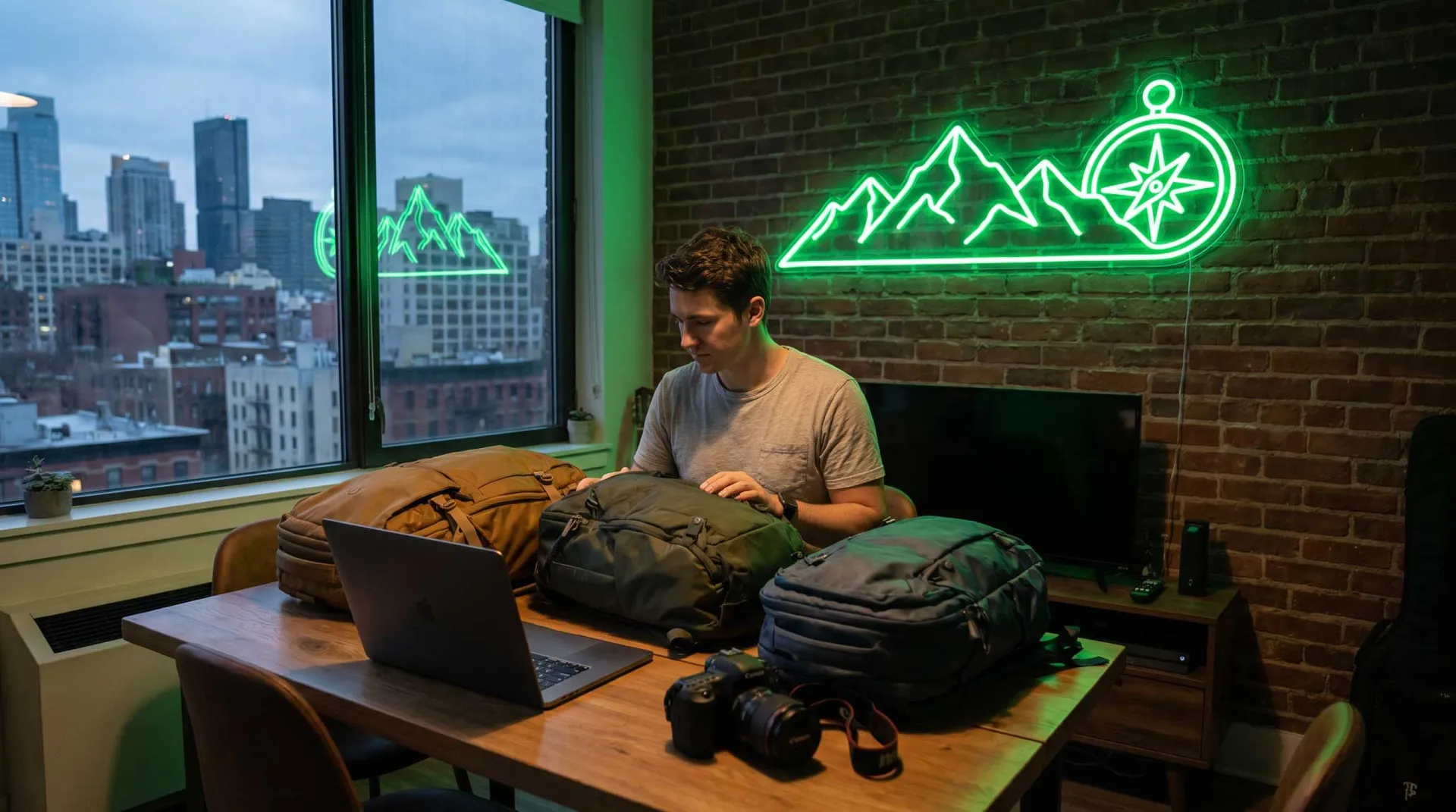
In the world of location independence, your office isn’t a corner suite or a cubicle—it is your bag. For remote workers, content creators, and software engineers traveling the world, finding a great backpack for a digital nomad is the single most important gear decision you will make. Your entire livelihood—laptops, portable monitors, cables, and personal items—rests squarely on your shoulders.
Choosing the best digital nomad backpack requires balancing strict airline regulations, physical ergonomics, and hardware security. If your bag fails, your office breaks.
Whether you are looking for the best backpack for one bag travel, trying to figure out how to choose a digital nomad backpack, or heading out for a 6-month stint as a digital nomad in Asia, this comprehensive guide covers everything you need to know.
Why Your Choice of a Digital Nomad Travel Backpack Matters
For a location-independent professional, a bag is more than just luggage; it is a mobile workstation infrastructure. Traditional travel backpacks are designed for clothing, while standard school or office bags lack the capacity and durability for long-term travel. A dedicated digital nomad travel backpack bridges this gap, combining heavy-duty electronics protection with ergonomic suspension systems.
When you transition to this lifestyle, you will face a classic community debate: backpack or suitcase? While a rolling suitcase works for resort travel, nomads frequently navigate cobblestone streets, broken sidewalks, staircases, and packed public transit. A premium, weather-resistant backpack grants you hands-free mobility and lets you clear airport security seamlessly.
How to Choose a Digital Nomad Backpack: Key Factors
If you want to know what do you look for in a travel backpack, you must evaluate four core pillars: accessibility, protection, comfort, and compliance.
1. The Opening Style: Clamshell vs. Top-Loading
Never buy a traditional top-loading hiking pack for remote work. Standard hiking packs turn your gear into a dark well where your laptop sits at the bottom. Instead, look for a clamshell opening (often called suitcase-style or panel-loading). This design zips open flat, letting you organize packing cubes, access your tech pouch, and pull out chargers without pulling everything else out first.
2. Device Protection & TSA Compliance
Your gear is your revenue engine. A premium pack must feature a dedicated tech storage area with a TSA-approved laptop sleeve. This allows the laptop compartment to lay flat on airport scanner belts without removing the devices entirely. Look for a sleeve that features a false bottom—a design where the laptop pocket terminates an inch or two above the actual bottom of the bag, protecting your computer from impact when you set the bag down hard.
3. Harness System & Ergonomics
Carrying 10 to 15 kilograms of gear through an airport terminal or up a steep hill in Medellín requires an ergonomic travel bag structure. Look for thick, padded shoulder straps, a breathable back panel to prevent sweat buildup, and a stowable hip belt or harness. A hip belt transfers up to 80% of the weight from your shoulders to your hips, protecting against lower back pain. When it's time to board a flight, a stowable harness tucks away cleanly so straps don't get caught in overhead bins or transit conveyor belts.
4. Weather Resistance and Security
You will eventually get caught in a tropical downpour or a sudden snowstorm. Your bag must feature weather-resistant or waterproof materials, such as Cordura, X-Pac, or ballistic nylon, alongside YKK AquaGuard zippers. For security in crowded transit hubs or shared living spaces, ensure the bag has lockable zippers on the main and tech compartments.
What Size Backpack for a Digital Nomad?
ne of the most common questions in travel forums is: what size backpack for a digital nomad? Or specifically, can you travel with just a 40L backpack? The answer depends on your travel style, but the 35L to 40L range is generally considered the sweet spot for an indefinite one-bag travel community lifestyle.
- 20L - 30L:| Minimalist/Warm climates only. Fits as a personal
- (Under 30L): Item under the seat on most budget airlines.
- 35L - 40L: The Golden Standard. Maximum carry-on compliant size for global airlines. Holds a full remote work setu plus clothes for all seasons.
- 45L+: Heavy gear loadouts or winter travel. May require checking in on strict regional budget carriers.
If you are needing a ~40L backpack for 4 weeks in Europe or asking what size backpack for a year's travel, aiming for a carry-on compliant or under 40L bag saves you thousands in checked baggage fees and eliminates the risk of airlines losing your gear.
For those looking to move fast without waiting at baggage carousels, a traveling backpack as a personal item (usually in the 25L–30L range) forces a highly efficient, minimalist packing list focused purely on everyday carry (EDC) essentials and lightweight apparel.
Solved: High-Capacity Bags for Extreme Tech Loadouts
A major pain point across remote work forums focuses on unique hardware setups:
- "Anyone out there travel with 2 laptops (and more) in a single backpack?"
- "What's the best backpack designed to carry two laptops securely, with enough space for chargers and daily essentials?"
- "Backpack for 2 laptops 15-inch, 2 portable monitors, camera and other stuffs?"
Most standard bags only offer a single laptop sleeve. If you are a full-stack developer or content creator carrying a primary machine, a client laptop, and multiple portable screens, you need an adapted strategy.
To safely transport a heavy, multi-screen setup, look for bags with divided main compartments or dedicated document sleeves alongside the main laptop slot. Wrap your secondary laptop or portable monitors in slim, protective neoprene sleeves before sliding them into the main compartment. Ensure your bag features heavy-duty internal compression straps to keep these devices from shifting and rubbing against each other while you are on the move.
Market Analysis: The Best Digital Nomad Backpacks Evaluated
When reviewing the best digital nomad backpack 2026 options, the community frequently points to a few top contenders. Let’s evaluate the industry standards based on actual long-term field testing.
Peak Design Travel Backpack 45L:
- The Verdict: The ultimate ecosystem for content creators and tech-heavy travelers.
- Pros: Exceptional build quality, dual side-access panels, expandable/compressible design, and excellent internal organization that works seamlessly with specialized packing cubes.
- Cons: Can feel heavy even when empty; premium pricing.
Osprey Farpoint 40 / Fairview 40:
- The Verdict: The community favorite for pure carrying comfort.
- Pros: Features a legitimate, breathable internal frame suspension system that transfers weight perfectly to the hips. It is fully carry-on compliant and highly durable.
- Cons: The laptop sleeve is positioned toward the front on older versions (though corrected in recent iterations), and it lacks dedicated, quick-access tech pockets.
Aer Travel Pack 3:
- The Verdict: The best choice for clean, urban aesthetics and dedicated organization.
- Pros: Made of durable ballistic nylon with a highly organized front admin panel for cables, mouse, and power banks. Excellent everyday carry (EDC) flexibility via external compression straps.
- Cons: Heavy profile and fits tight under small regional airplane seats.
Tortuga Travel Backpack Pro 40L:
- The Verdict: Built explicitly for the dedicated one-bag travel community.
- Pros: Highly water-resistant sailcloth fabric, incredible heights-adjustable harness system, and a spacious layout optimized entirely for clothes and electronics.
- Cons: Boxy appearance and premium price tag.
Nomatic Travel Bag 40L:
- The Verdict: A feature-packed bag for meticulous organizers.
- Pros: Includes dedicated shoe compartments, a laundry bag, and custom cord pass-throughs for charging devices on the go.
- Cons: The heavy, tarpaulin-style exterior scuffs easily and can look bulky when fully packed.
Conclusion
Choosing a backpack for a digital nomad lifestyle is an investment in your daily comfort and professional security. By focusing on a carry-on compliant footprint, robust device protection, and an ergonomic harness, you ensure your mobile office remains safe and comfortable, no matter where your journey takes you.
Frequently Asked Questions

Written by
Afzal Mustafa
ContributorA mysterious author who loves writing great content.
Keep Reading
View All
Best Countries Offering Remote Work Visas for Digital Nomads
Discover the top 10 countries offering remote work visas for digital nomads in 2025. Compare income requirements, tax benefits, internet speeds, and quality of life to choose the best destination for your lifestyle.
Best Portable Monitors for Remote Workers on the Move
Discover the best portable monitors for remote workers on the move. Our expert guide covers key factors like display, connectivity, and portability, plus top picks for every budget. Boost your productivity anywhere.